AWS confirms permanent customer data loss caused by war
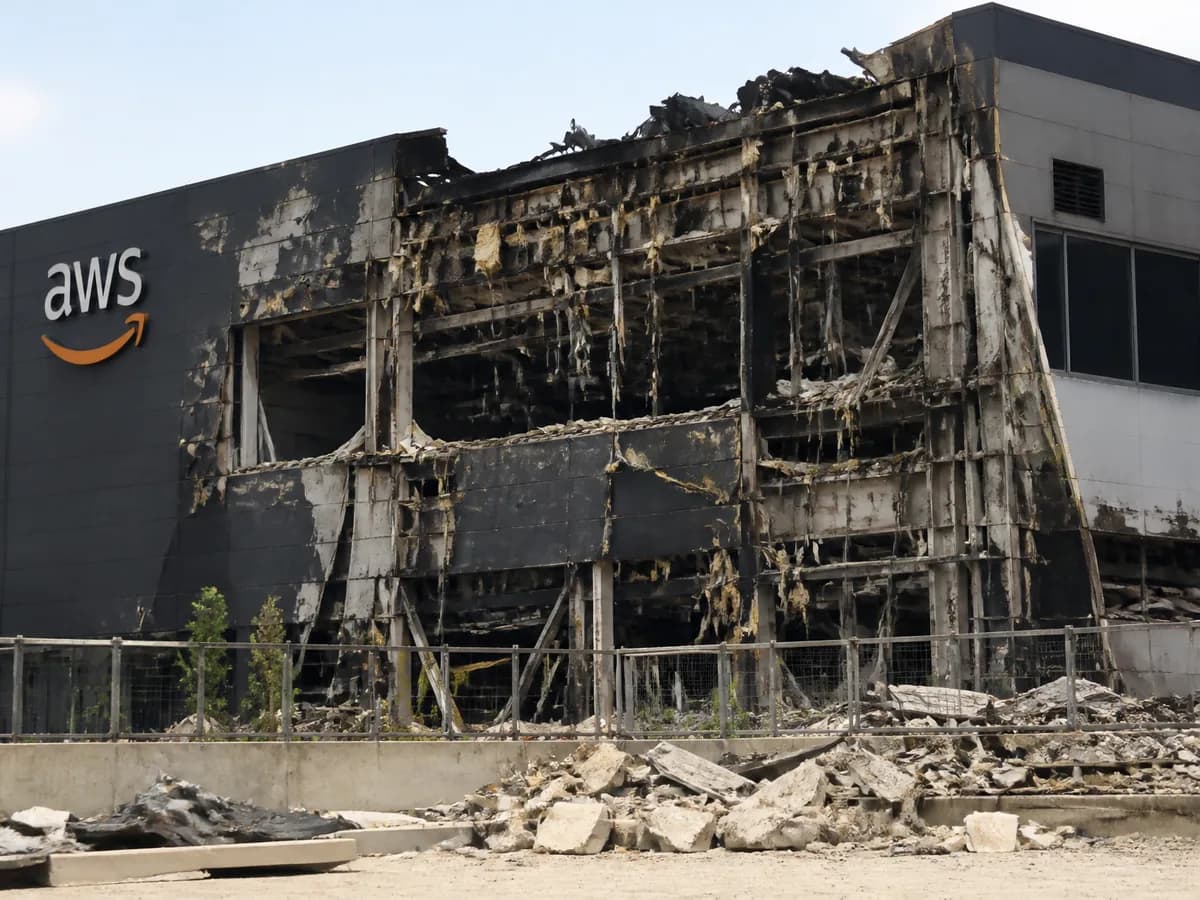
On September 15, 2026, Amazon confirmed a first in the history of cloud computing: customer data hosted in its Bahrain region (me-south-1) is permanently unrecoverable, destroyed during the conflict with Iran. The confirmation landed on the AWS Health Dashboard, the company's official incident channel. As Reuters and The Register report, resources and data stored exclusively in that region are gone for good. The same applies to one of three availability zones in the UAE region (mec1-az2).
What happened
The story goes back to March 2026. From the start of the conflict, Iranian strikes hit Amazon infrastructure in the Middle East: one availability zone in Bahrain in March, a second in April. The entire region went offline.
Six months later, the verdict is final: the physical damage exceeded what the platform could repair. A cloud region can survive a control plane outage, a fire, or a network cut. It cannot survive repeated drone strikes on its buildings.
"Beyond what our multi-AZ services are designed to withstand"
Amazon's statement deserves a second read: the damage affected multiple availability zones and "exceeded what our regional and multi-AZ services are designed to withstand."
In other words, multi-AZ redundancy — sold for fifteen years as the gold standard of high availability — rests on an assumption: nobody will ever destroy two zones at once. An armed conflict ignores that assumption entirely. And to be fair to AWS, nobody sizes their architecture to survive a war.
This is the concrete version of the scenario we described in our piece on data centers on the front line: the physical correlation of risks breaks technical redundancy.
Most customers made it out
The reassuring part: the majority of customers had migrated to other regions as soon as the first strikes hit, restoring from backups or copying data that was still accessible. Those with genuine active multi-region setups — not just on slides — went through the episode without surprises.
Two lessons worth keeping:
- Backups in the same region as your workloads are worthless against this kind of event. The destruction is total and simultaneous: the local copy dies with production.
- Geopolitical risk now belongs in your disaster recovery plans, alongside data center fires and power outages. Ars Technica and Data Center Dynamics cover the extent of the infrastructure damage.
The test to run
A simple exercise: if your primary region physically disappeared tomorrow, how long would your recovery plan hold? And more importantly, where are your backups actually stored — in the same region as the data they're supposed to save?
For years, the worst-case cloud scenario was assumed to be a global control plane outage. It was a missile.
Sources
- www.reuters.com/world/middle-east/amazons-aws-is-unable-restore-access-bahrain-one-uae-cloud-data-zone-after-war-2026-09-15/
- www.theregister.com/off-prem/2026/09/16/aws-says-wartime-damage-means-some-middle-east-cloud-resources-are-gone-for-good/5296830
- arstechnica.com/gadgets/2026/09/iran-strikes-on-amazon-data-centers-caused-permanent-loss-of-customer-data/
- www.datacenterdynamics.com/en/news/aws-unable-to-restore-access-to-data-centers-hit-by-iran-strikes/